Our services
- Hague Apostille for 120+ countries — via FCDO routes
- Consular legalisation for countries not party to the Hague Convention
- Certified translation in 100+ languages
- Notary attestation via a licensed London network
Document services
Hague Apostille, consular legalisation, certified translation and notary attestation — through our London partner network for using British documents abroad.

Certificate of incorporation, articles, Companies House extracts and board resolutions — often needed with an Apostille when dealing with ministries or traditional banks in the Gulf and Egypt.
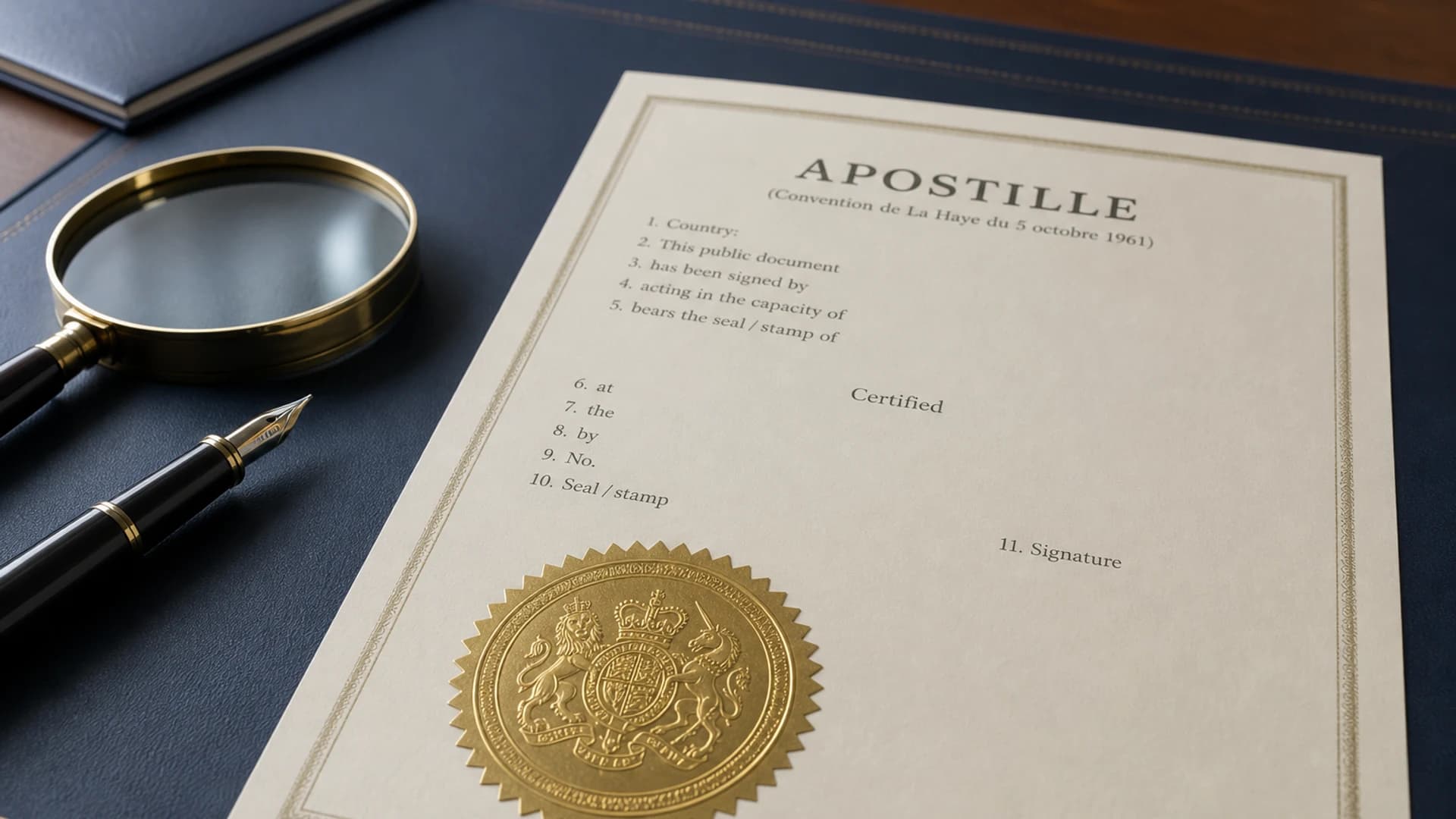
An apostille is a certificate from the British Foreign, Commonwealth and Development Office (FCDO) that confirms the authenticity of the signature/seal of an official British document for use in a country that is a signatory to the Hague Convention. For the company's certificate of incorporation or Companies House documents, the appropriate copy is prepared and then submitted to the apostille service (post, in-person delivery, same-day, or e-Apostille depending on the type of document). The time is from a day to several days depending on the option. Eteform coordinates through partners in London — request a quote via /contact or WhatsApp with the type of document and the target country.
If the target country is not a signatory to the Hague apostille convention, you will usually need consular legalisation via that country's embassy/consulate in London after the British notarisation. An apostille is enough for more than 120 signatory countries. The process is longer and more expensive than a standard apostille. Check the requirements of the receiving body before applying. The /consular-legalisation and /legalisation pages explain the options; contact us for a quote depending on the country and document.
Notarisation by a Notary Public confirms the signatory's identity or the authenticity of a copy before a British notary. An apostille is a subsequent step from the FCDO that recognises that notarisation or the official document for international use. Some documents need both in sequence; certain government documents may accept an apostille directly. For countries not signatory to the Hague Convention, consular legalisation follows the notarisation. See /legalisation and /apostille depending on your case.
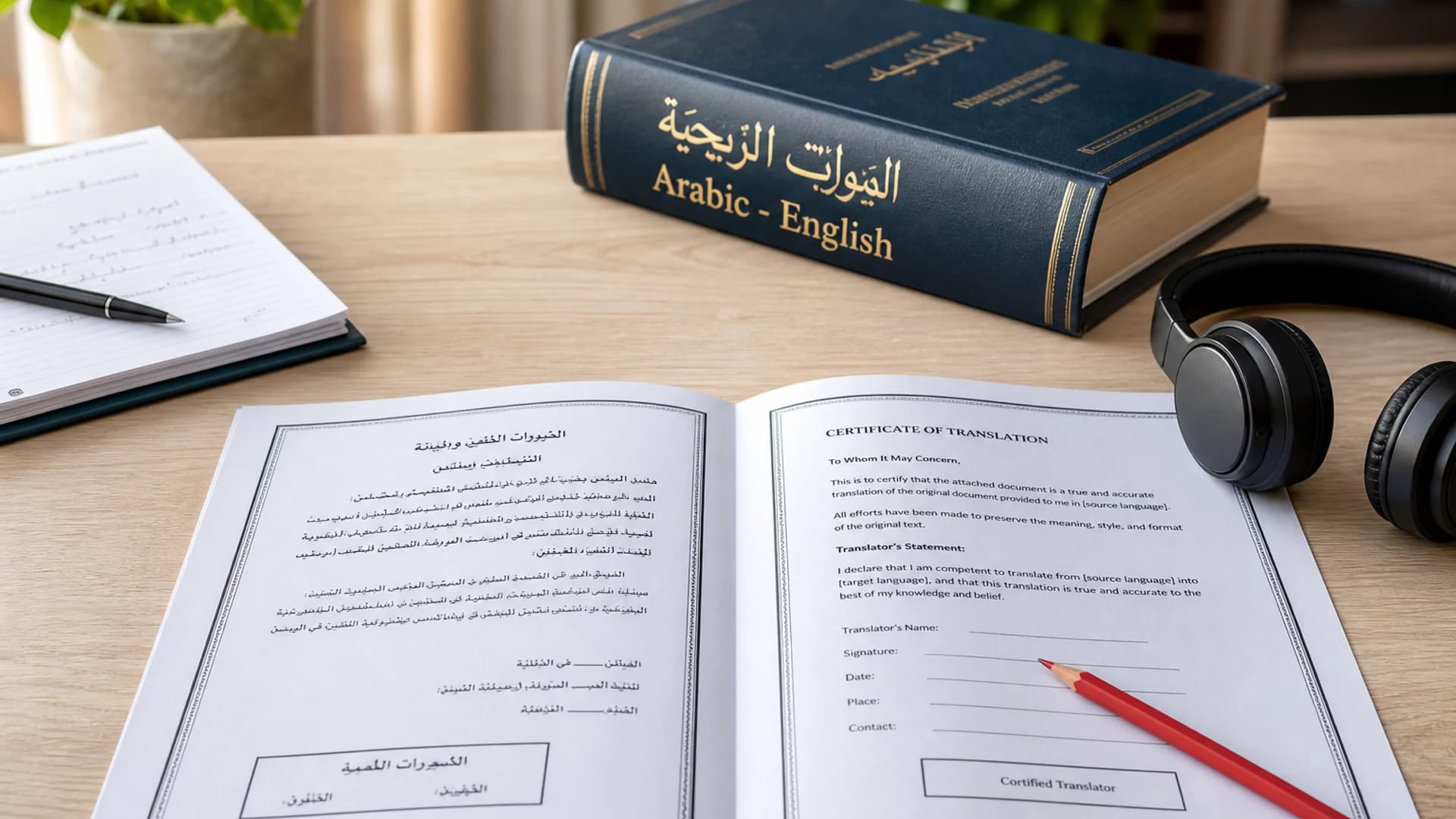
When an Arab or foreign body requests a copy in another language of the certificate of incorporation, a contract, or an official document. The certified translation is usually attached with the apostille or consular legalisation. Wise and Stripe rarely request an Arabic translation — English is enough. For embassies, ministries, universities and traditional banks in the Gulf and Egypt, translation is common. See /certified-translation to request a quote.
Usually yes if an official body, a bank or a local partner requests a 'certified British document'. The certificate of incorporation issued by Companies House is a British document; to use it before bodies in Saudi Arabia, Egypt, the UAE or elsewhere, a Hague apostille from the FCDO may be required, and sometimes a certified translation. Not every daily use (Wise, Stripe, Shopify) requires an apostille — the official PDF is usually enough. An apostille is more often required for government contracts, opening traditional accounts, or proving the company before courts/ministries. Eteform provides guidance and can coordinate the apostille service through partners in London — see the /apostille page.
المزيد في الأسئلة الشائعة.